Long before Sheldon Fernandez built an AI company, his father had one piece of career advice.
“If you want to succeed with computers, go to Waterloo.”
Fernandez took the advice, studying computer engineering at the University of Waterloo before building tech companies and later co-founding DarwinAI in Waterloo Region. Apple acquired the AI company in 2024.
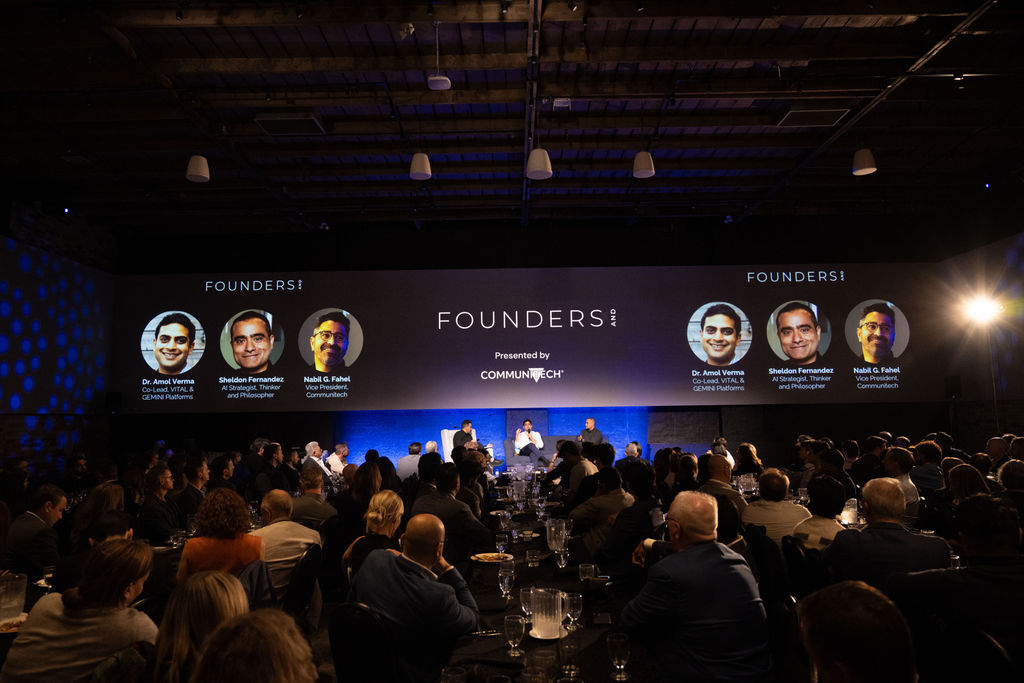
Years later, Fernandez was back in Kitchener at the latest Founders & Physicians, hosted by Communitech’s Vice President, Nabil Fahel. Fernandez was joined by Dr. Amol Verma, a physician and scientist who’s spent more than a decade exploring how data and AI can improve patient care.
Verma is a general internist and scientist at St. Michael’s Hospital, the Temerty Professor of AI Research and Education in Medicine at the University of Toronto and co-lead of GEMINI and VITAL.
They took on a question that seems to get harder to answer as AI gets better. We know there’s potential, but do we have the ambition and the execution to make the most of it here at home?
A local case for care
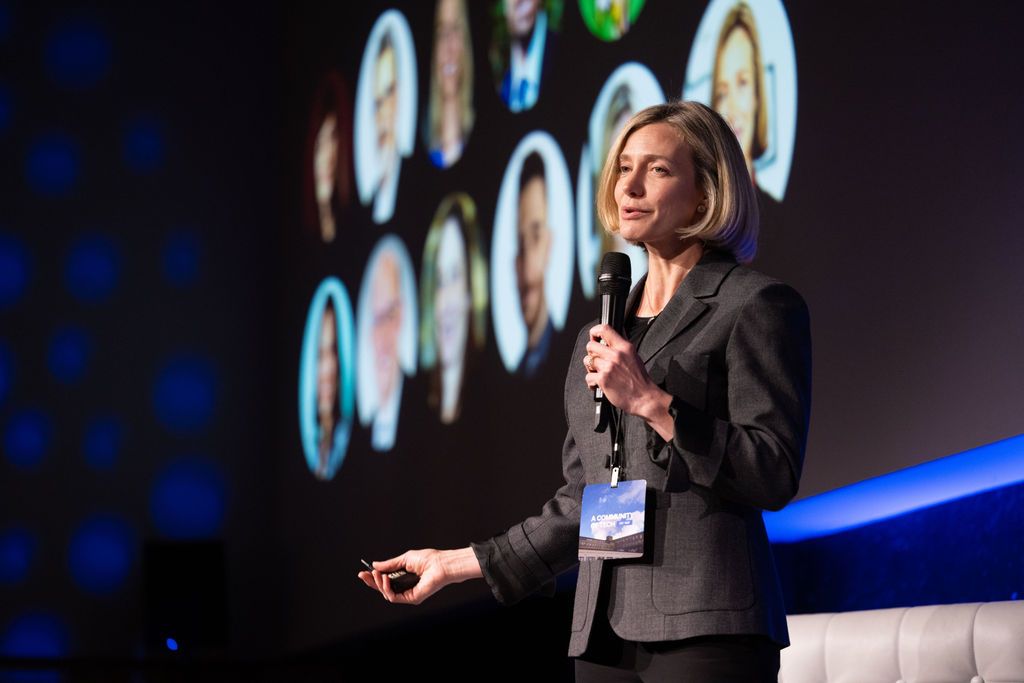
Before the fireside chat, Heather Campbell, president of Vive Development, put a local health-care problem in front of the room.
A mother of two young children, Campbell described spending hours in emergency rooms wondering whether she was overreacting, underreacting or exposing her kids to whatever else was circulating in the waiting room.
She’s now working on a proposed non-profit pediatric urgent care centre in Waterloo Region. Campbell said her team has already secured a space and collected emergency-department data. They’ve also been consulting local physicians.
“We’re driven to move this forward but we can’t do this alone,” she said, asking the room for clinical leadership perspectives, partners and introductions.
Her pitch offered a local version of the challenge the panel would examine at a much larger scale. A promising idea is one thing, but getting it into care is another.
The proof is in the prognosis
“We have a handful of truly life saving AI therapies,” Verma said.
He pointed to AI-supported breast cancer screening, hospital monitoring and AI scribes that can reduce administrative work for physicians.
At St. Michael’s, CHARTWatch offers one example of what implementation can look like. The AI early-warning system monitors hospitalized patients for signs of deterioration. A published evaluation found a 26 per cent reduction in unanticipated mortality after it was introduced on a general internal medicine ward.
The data infrastructure behind this work started with a much smaller question. More than a decade ago, Verma and his colleagues wanted to know where care could improve, but they didn’t have the data to tell them which problems to solve.
“We started to go through 600 patient charts by hand, but at the same time, watching hospitals digitize,” said Verma.
Instead of combing through charts one at a time, the team could pull information from electronic health records and study care at a much larger scale. For roughly the same budget, Verma said, they collected data on about 200,000 patients across several hospitals, and spotted variations in care that had been difficult to see before.
That early work grew into GEMINI, now Canada’s largest hospital data-sharing network for research and analytics, with more than three million hospital admissions across 40 Ontario hospitals and more than 150 research projects.
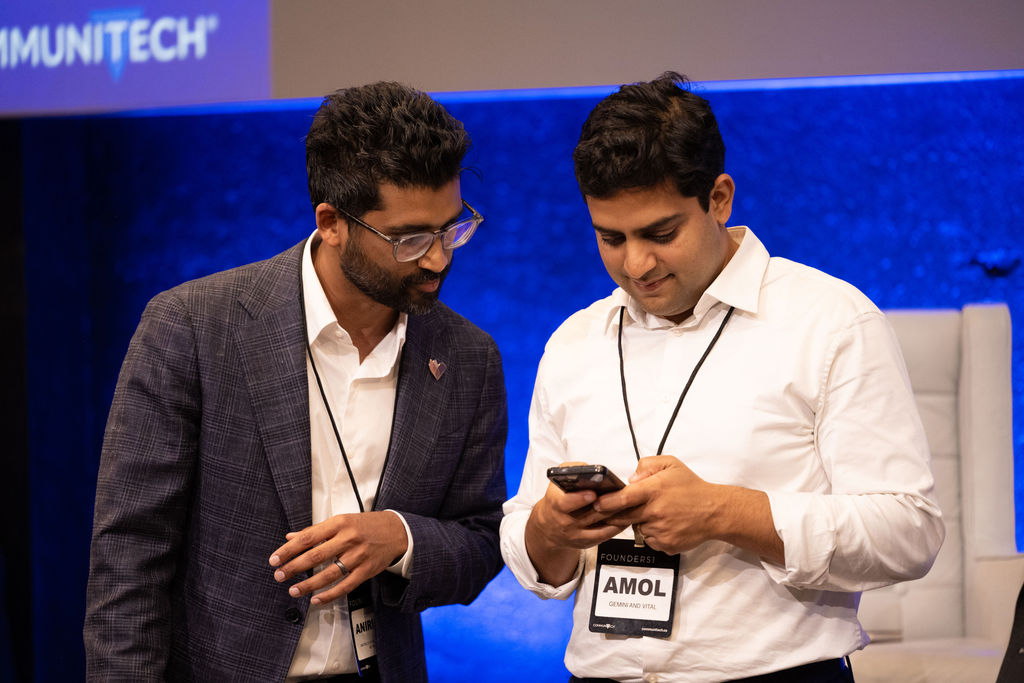
Verma and his collaborators are building on that model nationally through VITAL, a new platform designed to securely connect de-identified hospital data across provinces for AI development. A $100-million federal investment announced in June will help expand VITAL.
The road to bedside
That kind of scale makes the less glamorous part of innovation impossible to ignore.
“Let’s acknowledge there are very real risks, but there are very real solutions,” Verma said.
Those solutions aren’t all technical. Privacy, governance, regulation, procurement and partnerships can all stand between a promising tool and routine care.
“We’re so risk averse here in Canada that it was much easier for me to engage somebody across the border,” said Fernandez, on building DarwinAI.
For healthtech founders, a strong product may only be the beginning. Even proven technology still has to move through evidence, procurement and integration before it reaches patients.
Waterloo has entered the chat
That experience also influenced how Fernandez thinks Canadian founders should approach the market. Only one of roughly a dozen of his customers was Canadian, he told the room, even though the company’s technology and intellectual property (IP) were created here.
“Don’t think of yourself as a Canadian startup. Think of yourself as a global startup that happens to be based in Canada.”
For Fernandez, Waterloo Region and Canada already have the talent to compete at that level.
“We just don’t think big enough.”
The opportunity, he says, is not just to build strong tech here, but to build with global scale in mind.
Big dreams need a treatment plan
Thinking bigger, however, still has to come with a plan for getting there.
“We need rooms of people who are big dreamers, but also pragmatic on how to get there,” said Verma.
That balance between ambition and execution may be what determines how far AI in health care can go. The technology is advancing quickly, but getting it into actual care still means working through evidence, regulation, procurement and implementation. The challenge is to keep the ambition high without pretending the path will be short.
“Let’s focus on what we can do over a 10 year horizon.”